

Brain mapping is a set of advanced neuroscience techniques used to visualize and measure the structure and function of the brain. By generating detailed, real-time images or data maps of brain activity, it helps clinicians and researchers understand how specific brain regions interact.
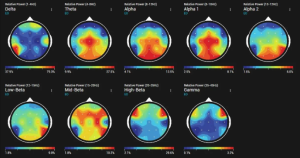
A qEEG produces colour-coded maps of brainwave patterns across regions. By comparing these patterns to age-normed references, we can identify imbalances or irregularities associated with challenges such as attention regulation (e.g., ADHD), anxiety, depression, sleep issues/insomnia, and cognitive or developmental differences. qEEG doesn’t diagnose conditions; it helps inform next steps and training plans.

How It Works
Brain mapping relies on several non-invasive or minimally invasive technologies to record what the brain is doing: Quantitative Electroencephalography (qEEG): Places sensors on the scalp to measure electrical activity (brainwaves). It evaluates areas of over- or under-activity. Functional Magnetic Resonance Imaging (fMRI): Measures brain activity by detecting changes in blood flow. Brain Stimulation/Mapping During Surgery: Used by neurosurgeons to precisely identify functional areas (like those responsible for language or movement) while a patient performs tasks.
Why It Is Used
Brain mapping translates complex neurological activity into targeted, actionable strategies: Mental Health & Neurological Disorders: Maps are often compared to standardized databases of healthy brains to identify dysregulations linked to conditions like ADHD, anxiety, depression, PTSD, and insomnia. This information helps guide neurofeedback or neuromodulation treatments.
Surgical Navigation
Neurosurgeons use functional brain mapping to guide the removal of tumors or treat epilepsy, ensuring critical functions like vision, speech, and motor skills are safely preserved.
Cognitive Research
Researchers use it to map complex neural networks to understand how the brain learns, ages, or responds to disease. The process is painless, safe, and serves as a vital diagnostic tool to ensure highly customized medical and therapeutic care.
Brain mapping is a non-invasive and non-drug diagnostic tool with a low risk of negligible side effects. The only potential side effect we have seen in 30 years of using the technology is infrequent, minor, and temporary skin irritation.
Is brain mapping legitimate?
QEEG Brain Mapping | Neurofeedback | Neurohealth Associates
Brain mapping is a legitimate, scientifically backed tool used in hospitals and clinics, primarily for surgical planning and evaluating brain function. However, its use in diagnosing or treating mental health conditions can be heavily overstated in commercial settings.
Legitimate Uses of Brain Mapping
Neurological & Neurosurgical Planning: In medical settings, techniques like fMRI and electrical cortical stimulation help neurosurgeons map critical functions (like speech and movement) to safely remove tumors or treat epilepsy.
Research and Diagnostics
Brain mapping helps researchers understand neurological disorders like Alzheimer’s, Parkinson’s, and cellular disruptions.
Mental Health & qEEG
In mental health, brain mapping often refers to Quantitative Electroencephalography (qEEG), which measures electrical brainwave activity.
Legitimacy
When conducted by trained clinicians, it can provide valuable information about brain dysregulation and patterns associated with ADHD, anxiety, depression, or PTSD.
The Catch: qEEG is not an official diagnostic tool on its own. It should only be used as a supplementary clinical tool alongside traditional psychiatric assessments.
To ensure you are receiving ethical care, verify that providers are formally licensed and rely on standardized databases to interpret the data. You can learn more about how neuroimaging ethics are standardized by exploring World Brain Mapping guidelines.
Is brain mapping painful?
 Brain mapping is a non-invasive procedure, so it doesn’t have significant side effects. However, some people may experience mild discomfort during or after the process, such as skin irritation from the electrodes or a slight headache.
Is Brain Mapping A Legitimate Treatment Protocol?
Brain mapping is a safe and effective procedure for identifying brain dysregulation and other brain functioning abnormalities.
qEEG brain mapping has helped thousands of patients improve their quality of life and achieve symptom relief.
By mapping the patient’s brainwave activity, we can identify which areas of the brain are over or under-activated and develop highly effective treatment protocols for disorders like ADHD, PTSD, autism, stress, anxiety, panic attacks, depression, insomnia, and more.
In this article, we’ll discuss how brain mapping works, what it’s used for, whether or not it’s safe, and more.
For immediate assistance, please don’t hesitate to fill out our contact form or call us at (844) 669-6400 to learn more about qEEG brain mapping and our non-drug treatment options.
What Is Brain Mapping & How Does It Work?
Brain mapping is a non-invasive and non-drug procedure used to identify any area of abnormality linked to symptoms.
To begin, our staff places 19 sensors around the patient’s scalp that measure and record brain wave activity. During qEEG brain mapping, it’s important to note that the patient’s brain is not stimulated in any way.
Instead, brain mapping is akin to using a thermometer to take a patient’s temperature: the sensors simply read what’s going on in the patient’s brain, they don’t alter the patient’s brain activity.
Once the brain has been mapped, the recordings are processed through an FDA-approved database to compare them to neurotypical results for the same age group. This comparison will reveal any areas of the brain that aren’t functioning within the typical range.
The results are then used to create a neurofeedback and neurostimulation treatment protocol that’s tailored for each patient’s unique needs and circumstances.
With this approach, we’ve helped thousands of patients achieve symptom relief from a variety of debilitating disorders.
Does Brain Mapping Really Work?
Brain mapping is an invaluable tool for creating customized treatment programs for patients struggling with neuro physical disorders, including ADHD, depression, anxiety, Autism, PTSD, and more. It allows us to understand where and what kind of dysregulation is occurring and how it contributes to the patient’s symptoms.
Is Brain Mapping Safe?
As a non-invasive and non-pharmaceutical procedure, brain mapping is completely safe. The process is not doing anything to the brain, but simply recording what the brain is doing. Brain mapping is painless, does not involve any external stimulation to the brain, and causes no side effects. The tools used on the patient simply measure brain wave activity so that we can identify which regions and networks of the brain are over or under-activated.
Brain mapping has been shown to be useful—and safe—for identifying anything from seizures to symptoms linked to ADHD and other brain-related (neurophysical) conditions, including autism.
Why Is Mapping The Brain So Important?
The human brain is constructed of multiple networks of interconnected neurons. These networks are responsible for organization, time management, memory, mood, emotional regulation, language processing, attention, understanding non-verbal social cues, and more.
Ideally, these networks have strong connections with each other that help the brain function well. When there is a communication breakdown between these networks, the patient may start to experience reduced cognitive functioning, emotional dysregulation, and other debilitating symptoms.
Brain mapping investigates each of these networks to determine any misfires or dysregulation.
Many of the distressing conditions that our patients suffer from develop as a direct result of brain dysregulation. Disorders like ADHD, autism, PTSD, depression, anxiety, panic attacks, stress, insomnia, and others derive from some sort of disrupted brain wave activity.
To understand more about how the brain works, let’s take a look at the different types of brain waves.
Delta waves are the slowest brain waves. Typically, they occur predominantly during infancy and during deep sleep
Theta waves are slightly higher frequency but are still considered slow brain waves. They happen when you are drowsy, daydreaming, or drifting off to sleep
Alpha waves are the next highest frequency waves that occur in the brain. They show up maximally during states of calm awareness and relaxation. They occur at the highest amplitude predominantly in the posterior parts of the brain during meditation with eyes closed
Beta waves are the fastest waves and occur during times of intense concentration and during task engagement. Excessive beta waves can cause anxiety
Brain mapping allows us to identify when and where each of these wave types occur in the patient’s brain. When results are compared to “normal” brain activity, we can create a targeted approach that directly addresses the patient’s specific condition and symptoms.
How Can Brain Mapping Help Be Used To Develop Optimal Treatment Plans?
Brain mapping is the first step to set up neurofeedback therapy, a treatment that aims to successfully treat a variety of conditions and their symptoms. These conditions are primarily neurologically-based, even if their symptoms are often cognitive, emotional, or behavioral.
Indeed, brain mapping is incredibly useful when treating the following conditions:
ADHD/ADD
Autism Syndrome Disorder
Asperger’s
Depression
Stress Disorders
Generalized Anxiety Disorder
PTSD
Insomnia
Panic Attacks
Substance Abuse
All of the above conditions are associated with dysregulation of the brain. The Baja Ibogaine Center’s brain mapping process ensures that these dysregulations are identified so the symptoms can be treated appropriately.
How Baja Ibogaine Center Uses Brain Mapping
Brain mapping at the Baja Ibogaine Center is used in conjunction with neurofeedback and neuromodulation.
When the brain has been mapped, our medical director can then design individually tailored treatment protocols using neurofeedback therapy and neuromodulation.
Neurofeedback
Neurofeedback, or EEG Biofeedback, is a non-drug and non-invasive treatment protocol that helps patients leverage the brain’s own resources to improve cognitive functioning and emotional well-being.
How does it work?
Before receiving neurofeedback, patients are unaware of how their brain’s dysregulated patterns are linked to symptoms. However, with the help of neurofeedback training, patients can learn how to “shift” their brains into a healthier functional pattern.
For example, one of our neurofeedback treatments converts the patient’s brainwaves into a computer game where a car is driving down a highway. Once the patient shifts their brainwaves to a faster, higher frequency necessary for concentration, the car stays in the correct lane and an auditory tone goes off. This tone is then triggered every half second to reinforce this response, and with practice, patients can learn this technique without the help of the game.
And unlike drug-based treatments, neurofeedback therapy provides improvement without the need for continuous treatment. Moreover, there are no dangerous side effects associated with neurofeedback therapy.
Neuromodulation
Like neurofeedback, neuromodulation is a safe, non-drug treatment protocol used to guide the brain to create healthier functioning patterns.
Neuromodulation has a similar effect to training wheels on a bicycle. The training wheels give the child balance on the bicycle, and as he rides the bicycle balanced, his brain quickly adapts to it and controls balance without requiring training wheels.
At the Baja Ibogaine Center we use Neurofield technology to stimulate the brain just enough so the brain can replicate healthy brainwave activity. Once the patient experiences what proper functioning feels like, the brain can more easily adapt and create that brainwave pattern on its own.
Contact Baja Ibogaine Center Today!
For more information about how the Drake Institute can help you with our brain mapping technology, call today at 1-844-660-4600 or fill out the free phone consultation form using the link below.